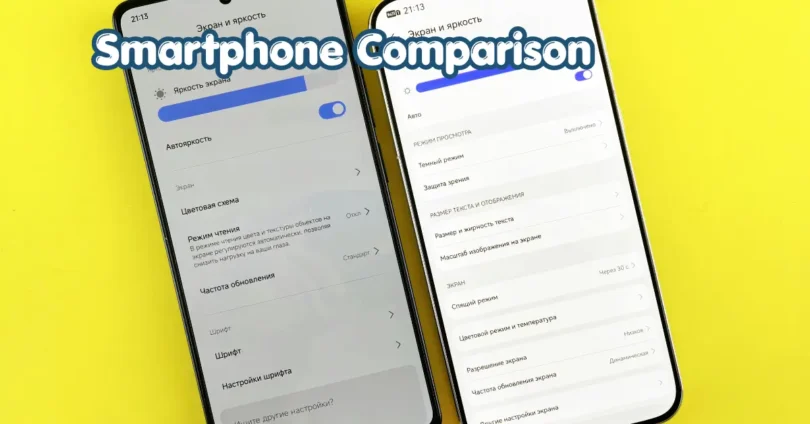

Suggested URL Slug:/smartphone-comparison/
Focus Keyword: Smartphone Comparison
Related Keywords:
- best smartphone comparison
- compare smartphones
- smartphone buying guide
- phone comparison
- smartphone features
Smartphone Comparison: What Should You Look At?

Smartphone comparison is the process of evaluating two or more phones based on features that matter to your needs, such as performance, camera quality, battery life, display, software, storage, durability, and price.
A good comparison is not simply about deciding which phone has the biggest specifications. The better choice depends on how you use your phone, your budget, and which features you value most.
For example, a person who takes lots of photos may prioritize camera hardware and image processing, while a mobile gamer may care more about the processor, cooling system, display refresh rate, and sustained performance.
This guide explains how to compare smartphones properly so you can make a more informed buying decision.
Why Is Smartphone Comparison Important?
Smartphone prices and specifications can vary significantly, but a higher price does not automatically mean that every feature is better.
A proper comparison helps you identify:
- Which phone offers the features you actually need
- Whether the performance is suitable for your apps and games
- How long the battery may last for your usage pattern
- Whether the cameras match your photography needs
- How good the display is for videos, reading, and gaming
- How much storage you really need
- How long the manufacturer is likely to support the device
- Whether the phone offers useful value for its price
Comparing phones before purchasing can also prevent a common mistake: paying for premium features that you rarely use.
What Are the Most Important Smartphone Features to Compare?
The most important areas are performance, display, cameras, battery, software support, storage, connectivity, build quality, and price.
However, their importance depends on the individual user.
1. Processor and Performance
The processor, or system-on-chip (SoC), has a major influence on how quickly a smartphone handles applications, games, photography processing, multitasking, and other demanding tasks.
When comparing phones, don’t look only at the processor’s name. Consider the overall device configuration and real-world performance.
Look at:
- Processor generation and architecture
- CPU and GPU performance
- RAM capacity
- Storage technology
- Thermal management
- Software optimization
A powerful processor can be especially useful for gaming, video editing, multitasking, and other demanding workloads.
For basic tasks such as messaging, browsing, email, and social media, you may not need the most powerful chip available.
2. RAM and Storage
RAM helps a smartphone keep applications available for faster multitasking, while internal storage is used for apps, photos, videos, documents, and other files.
When comparing phones, consider both.
RAM: More RAM can help with demanding multitasking, although software optimization also matters.
Storage: More storage is useful if you take lots of photos, record high-resolution video, download games, or keep large media libraries offline.
For many users, storage can become a more noticeable limitation over time than small differences in processor performance.
Also check whether the phone supports expandable storage. Many modern smartphones rely entirely on internal storage.
3. Display Quality
The display is one of the smartphone components you interact with most frequently.
Important specifications include:
- Display size
- Resolution
- Panel technology
- Refresh rate
- Brightness
- HDR support
- Color reproduction
- Touch response
- Screen protection
OLED and related display technologies can provide strong contrast because individual pixels can be controlled more precisely. LCD displays can still provide a good viewing experience, depending on the implementation.
A higher refresh rate can make scrolling and compatible animations feel smoother. However, refresh rate is only one part of display quality.
If you frequently watch movies, read, play games, or use your phone outdoors, display quality should be an important part of your smartphone comparison.
How Important Is Smartphone Camera Quality?
Camera quality is important, but megapixel count alone does not determine whether a phone takes better photographs.
A smartphone camera system can include:
- Main camera
- Ultrawide camera
- Telephoto camera
- Macro camera
- Front-facing camera
- Image stabilization
- Computational photography features
Camera Hardware vs. Image Processing
Two smartphones with similar camera specifications can produce noticeably different results because manufacturers use different image-processing algorithms.
When comparing cameras, consider:
- Daylight image quality
- Low-light performance
- Dynamic range
- Skin-tone reproduction
- Autofocus performance
- Video stabilization
- Zoom quality
- Ultrawide quality
- Portrait photography
- Front-camera performance
If possible, look at real sample photographs taken under similar conditions rather than judging cameras solely from specification sheets.
Optical Zoom vs. Digital Zoom
Optical zoom uses camera hardware designed for magnification, while digital zoom relies more heavily on cropping and computational processing.
A phone with a dedicated telephoto camera can therefore be more useful for people who frequently photograph distant subjects.
For everyday photography, however, a good main camera may matter more than having multiple secondary sensors.
Battery Life and Charging
Battery capacity is normally expressed in milliamp-hours (mAh), but battery capacity alone does not tell you exactly how long a phone will last.
Actual battery life depends on factors such as:
- Processor efficiency
- Display size and refresh rate
- Screen brightness
- Mobile network conditions
- Gaming
- Camera use
- Background applications
- Software optimization
- Battery capacity
A smartphone with a large battery can still have disappointing endurance if its hardware and software are inefficient.
When comparing phones, look for real-world battery testing where possible.
What About Fast Charging?
Fast charging can be extremely convenient for people who frequently need to recharge their phones during the day.
Compare:
- Wired charging speed
- Wireless charging availability
- Charger compatibility
- Charger included in the box
- Battery-management features
A phone with slightly slower charging may still be suitable if its battery lasts comfortably through your normal day.
Software and Updates Matter More Than Specifications
Software support is one of the easiest smartphone features to overlook.
A phone may have excellent hardware, but its long-term value can be affected by how long the manufacturer provides operating-system updates and security patches.
When comparing smartphones, check:
- Operating-system version
- Update policy
- Security-update commitment
- Manufacturer’s update history
- Pre-installed applications
- User-interface design
- Privacy controls
- AI and productivity features
Longer software support can make a phone more practical to keep for several years.
The exact update policy varies by manufacturer and model, so verify the official policy for the specific device rather than assuming every phone from a brand receives identical support.
Build Quality and Durability
A smartphone’s physical construction affects how well it may handle everyday use.
Consider:
- Frame material
- Front and rear glass
- Screen protection
- Water and dust resistance
- Weight
- Thickness
- Ergonomics
- Repairability
- Availability of replacement parts and service
An IP rating can provide useful information about resistance to dust and water under defined testing conditions. It does not mean that a phone is completely immune to liquid damage in every situation.
A protective case and screen protector can also reduce the risk of everyday damage.
Connectivity and Other Features
Connectivity is another important part of a complete smartphone comparison.
Depending on your location and requirements, check whether the phone supports:
- 4G LTE
- 5G
- Wi-Fi standards
- Bluetooth
- NFC
- Dual SIM or eSIM
- GPS and other positioning systems
- USB-C
- Wired video output, where supported
Don’t assume that every version of the same smartphone has identical network support. Regional models can have different bands, SIM configurations, or features.
This is particularly important if you purchase an imported smartphone.
Smartphone Comparison by User Type
There is no single smartphone specification that matters most to everyone.
Best Priorities for Students
Students may benefit from:
- Long battery life
- Reliable performance
- Good display
- Adequate storage
- Strong connectivity
- Durable construction
- Reasonable price
A balanced phone can be more useful than an expensive flagship if the primary tasks are studying, video calls, browsing, note-taking, messaging, and entertainment.
Best Priorities for Mobile Gamers
Gamers should pay particular attention to:
- Processor and GPU performance
- Sustained performance
- Cooling
- Display refresh rate
- Touch response
- Battery capacity
- Charging speed
- Stereo speakers
Peak benchmark performance does not always represent sustained gaming performance. Thermal management can become important during longer gaming sessions.
Best Priorities for Photography
Photography-focused users should compare:
- Main camera sensor
- Telephoto capability
- Ultrawide camera
- Optical image stabilization
- Autofocus
- Night photography
- Video recording
- Image-processing quality
Camera versatility can be more important than simply having the highest megapixel number.
Best Priorities for Business Users
For work, consider:
- Battery life
- Call quality
- Connectivity
- Security features
- Storage
- Multitasking
- Email and productivity applications
- Software-update support
- Accessories and ecosystem compatibility
A reliable phone that works smoothly throughout the day can be more valuable than a device with impressive specifications that you rarely use.
Smartphone Comparison: Specifications at a Glance
| Feature | What to Compare | Why It Matters |
|---|---|---|
| Processor | Generation, CPU, GPU, efficiency | Performance and gaming |
| RAM | Capacity and memory management | Multitasking |
| Storage | Capacity and technology | Apps, photos, videos |
| Display | OLED/LCD, resolution, refresh rate | Viewing experience |
| Camera | Sensors, stabilization, processing | Photography and video |
| Battery | Capacity and real-world endurance | Daily usage |
| Charging | Wired and wireless speed | Convenience |
| Software | OS and update policy | Long-term usability |
| Build | Materials and durability | Everyday reliability |
| Connectivity | 5G, Wi-Fi, Bluetooth, NFC | Network and accessory compatibility |
| Price | Total cost and value | Budget management |
How to Compare Two Smartphones Step by Step
If you have two specific phones in mind, use this process.
Step 1: Define Your Budget
Start with the maximum amount you are comfortable spending.
Don’t increase your budget simply because one model has a longer specification list. Identify which features justify the additional cost.
Step 2: Identify Your Top Three Priorities
Choose the three features that matter most to you.
For example:
- Camera
- Battery
- Performance
Or:
- Display
- Software support
- Price
This prevents less important specifications from dominating your decision.
Step 3: Compare Core Hardware
Check the processor, RAM, storage, display, cameras, battery, and charging system.
Focus on meaningful differences rather than small specification variations.
Step 4: Check Software Support
Look at the manufacturer’s official update information for both devices.
This is particularly important if you plan to keep the smartphone for several years.
Step 5: Consider the Complete Package
Check what is included with the phone.
You may need to purchase a charger, case, screen protector, storage accessory, or other equipment separately.
Step 6: Check Regional Compatibility
If buying online or importing a phone, verify:
- Cellular bands
- SIM configuration
- 5G compatibility
- Warranty coverage
- Regional software restrictions
- Charging standards
- Local service availability
Step 7: Compare Real-World Reviews
Specifications tell you what a phone has. Reviews can help explain how those features perform in everyday use.
Look for consistent observations about battery endurance, cameras, thermals, software, display quality, and durability.
Common Smartphone Comparison Mistakes
Comparing Only the Price
A cheaper phone is not automatically better value, and a more expensive phone is not automatically better for your needs.
Compare the features that you will actually use.
Choosing Based Only on Megapixels
A camera’s megapixel count is only one specification. Sensor size, lenses, stabilization, processing, and software all influence photographic results.
Ignoring Software Updates

Hardware can remain capable for years, but software support varies between manufacturers and models.
Always check the update policy before buying.
Assuming More RAM Always Means Better Performance
RAM matters, but processor capability, storage speed, thermal management, and software optimization also influence performance.
Ignoring Storage
Running out of storage can be frustrating, especially if you take lots of photos or videos.
Think about how much storage you currently use and how quickly your library is growing.
Forgetting the Regional Model
Imported phones can have different cellular bands, software features, warranties, or SIM configurations.
Verify the exact model number before purchasing.
How to Get Better Value From a Smartphone
You don’t necessarily need the newest flagship to get a good smartphone experience.
Consider these practical strategies:
- Compare the previous generation with the newest model.
- Look for meaningful improvements rather than marketing language.
- Prioritize long software support.
- Buy enough storage for your expected usage.
- Check real-world battery performance.
- Consider refurbished devices from trustworthy sellers where appropriate.
- Compare the complete ownership cost, including accessories.
- Avoid paying for features you won’t use.
A well-balanced mid-range smartphone can be a better fit for some users than a premium device with features they rarely use.
What Specifications Should You Ignore?
You don’t need to ignore specifications completely, but some can receive too much attention.
Be cautious about making a purchase decision based on:
- Extremely high megapixel numbers alone
- Maximum theoretical charging speeds
- Benchmark scores without real-world context
- Marketing terms without technical explanation
- The number of camera lenses
- Small differences in processor clock speeds
The best specifications are the ones that translate into a meaningful improvement in your actual usage.
Frequently Asked Questions
What is the most important thing to compare when buying a smartphone?
The most important factors depend on how you use your phone. For most buyers, performance, battery life, display quality, camera capability, software support, storage, durability, and price are useful starting points. Identify your top three priorities first, then compare the phones based on those requirements rather than focusing only on specifications.
How do I compare two smartphones properly?
Start by comparing their processors, RAM, storage, displays, cameras, batteries, charging systems, software support, connectivity, and build quality. Then consider real-world reviews and the total price. Finally, check regional compatibility and also depends on the processor, storage technology, software optimization, and memory management. A phone with a well-balanced hardware and software configuration can provide a smoother experience than another camera performance. Sensor quality, lens design, optical stabilization, autofocus, image processing, and video capabilities can have a major impact on the final result. When possible, compare real photographs and videos captured smartphone can remain useful as long as its performance, battery, software support, storage, and physical condition meet your needs. Before replacing warranty coverage, especially if you are purchasing an imported model.
Is more RAM always better in a smartphone?
Not necessarily. More RAM can help with multitasking, but overall performance also depends on the processor, storage technology, software optimization, and memory management. A phone with a well-balanced hardware and software configuration can provide a smoother experience than another device with more RAM but weaker optimization.
Should I choose a phone based on its camera megapixels?
No. Megapixels are only one part of camera performance. Sensor quality, lens design, optical stabilization, autofocus, image processing, and video capabilities can have a major impact on the final result. When possible, compare real photographs and videos captured in similar lighting conditions instead of relying only on camera specifications.
How long should I keep a smartphone?
There is no universal replacement schedule. A smartphone can remain useful as long as its performance, battery, software support, storage, and physical condition meet your needs. Before replacing it, consider whether a battery replacement, additional storage management, software update, or repair could solve the problem more economically.
Conclusion: Make Your Smartphone Comparison Based on Your Needs
A useful smartphone comparison goes beyond checking which phone has the longest specification list.
The right approach is to compare performance, display quality, cameras, battery life, software support, storage, durability, connectivity, and price according to your personal priorities.
Before buying, identify your budget and the three features that matter most to you. Then compare the complete package rather than focusing on one impressive specification.
If you’re comparing two particular smartphones, create a simple side-by-side checklist covering performance, camera, display, battery, software support, storage, durability, and total cost. That makes it much easier to see which device fits your actual requirements.
Rank Math SEO Details
Rank Math Schema Title:
Smartphone Comparison: Complete Guide to Choosing a Smartphone
Rank Math Schema Description:
Learn how to compare smartphones by performance, display, camera, battery, software, storage, durability, connectivity, and price.
Five SEO-Friendly Image Alt Texts
- Smartphone comparison showing two modern phones side by side
- Smartphone comparison of camera, battery, display, and performance features
- Person comparing smartphone specifications before buying
- Side-by-side smartphone comparison on a desk
- Smartphone buying guide comparing display, camera, processor, and battery
Five Related Article Ideas
- How to Choose a Smartphone: Complete Buying Guide for Beginners
- AMOLED vs LCD Display: Which Smartphone Screen Is Better?
- How Much RAM Do You Need in a Smartphone?
- Smartphone Camera Guide: How to Choose the Right Camera Phone
- How to Check Smartphone Specifications Before Buying Online
Primary focus keyword: Smartphone Comparison
Five related keywords:
- best smartphone comparison
- compare smartphones
- smartphone buying guide
- phone comparison
- smartphone features