
Mobile Phone Comparison makes it easier to choose a smartphone that fits your needs, budget, and daily routine. With so many phones offering different processors, cameras, displays, batteries, storage options, and software features, comparing specifications alone is not always enough.
A good phone comparison looks beyond numbers. For example, a higher megapixel camera does not automatically mean better photos, and a larger battery does not always guarantee longer battery life. Real-world performance depends on how the hardware, software, display, network connectivity, and other components work together.
This guide explains how to compare mobile phones step by step. You will learn what specifications matter, how to compare two phones, which features deserve the most attention, common buying mistakes, and how to choose a phone based on your actual needs.
What Is Mobile Phone Comparison?
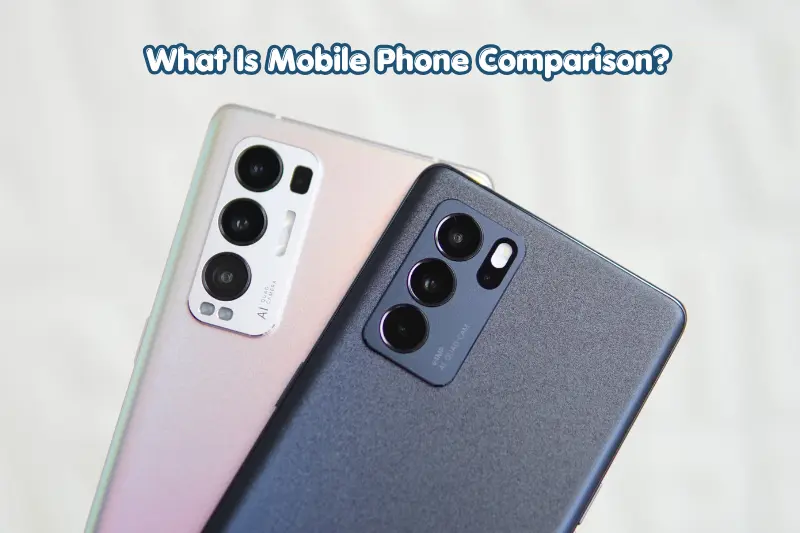
Mobile Phone Comparison is the process of evaluating two or more smartphones based on features, specifications, performance, price, software, and practical usability.
Instead of asking only which phone has better specifications, you should ask which phone provides the features you actually need.
For example:
- A gamer may prioritize the processor, GPU, display refresh rate, cooling, and battery.
- A photography enthusiast may focus on camera hardware, image processing, stabilization, and video capabilities.
- A student may want reliable battery life, storage, performance, and an affordable price.
- A business user may care more about software support, security, multitasking, connectivity, and battery life.
- A casual user may simply need a smooth interface, good camera, reliable battery, and enough storage.
The best comparison therefore depends on the person using the phone.
Why Is Comparing Mobile Phones Important?
Comparing phones before buying helps you understand what you are actually getting for your money. Two smartphones can have similar prices while offering very different strengths.
A proper comparison can help you:
- Identify the phone that matches your requirements.
- Avoid paying for features you will rarely use.
- Compare performance instead of relying only on brand reputation.
- Check whether the camera suits your photography needs.
- Understand battery and charging differences.
- Compare software and update policies.
- Check storage and memory options.
- Evaluate display quality and usability.
- Consider connectivity such as 5G, Wi-Fi, Bluetooth, and NFC.
- Find potential limitations before purchasing.
The goal is not simply to find the phone with the largest specification numbers. The goal is to find a balanced device that suits your everyday use.
How to Compare Two Mobile Phones
The easiest way to compare two smartphones is to examine the same categories for both devices.
Start with these major areas:
- Price
- Processor and performance
- Display
- Camera
- Battery
- Charging
- RAM and storage
- Software
- Build quality
- Connectivity
- Security features
- Long-term software support
You can then give more importance to the categories that matter most to you.
For example, if photography is your priority, camera performance should receive more attention than gaming performance. If battery life matters most, examine battery capacity, processor efficiency, display technology, and charging features together.
Mobile Phone Comparison by Processor and Performance
The processor is one of the most important components when comparing smartphone performance. It affects app loading, multitasking, gaming, image processing, power efficiency, and overall responsiveness.
Modern smartphones may use processors from families such as Qualcomm Snapdragon, MediaTek Dimensity, Apple silicon, or other mobile platforms.
What Should You Check?
When comparing processors, look at:
- Processor generation
- CPU architecture
- GPU capabilities
- Manufacturing process
- Performance benchmarks
- Thermal performance
- Power efficiency
- Real-world reviews
Benchmark scores can provide useful information, but they should not be the only deciding factor. A phone with a powerful processor can still feel less practical if it has poor thermal management, inefficient software, or limited battery endurance.
Who Needs a Powerful Processor?
A high-performance processor is particularly useful for:
- Mobile gaming
- Video editing
- Photo editing
- Heavy multitasking
- Running demanding applications
- Long-term performance requirements
For basic calls, messaging, browsing, streaming, and social media, an extremely powerful processor may not provide a noticeable advantage over a well-optimized mid-range chipset.
Mobile Phone Comparison by Display
The display is one of the components you interact with most frequently, so it deserves careful consideration.
Important display specifications include:
- Screen size
- Resolution
- Panel technology
- Refresh rate
- Brightness
- HDR support
- Touch response
- Screen protection
- Color reproduction
AMOLED vs LCD
AMOLED displays can produce deep blacks because individual pixels can be controlled differently, while LCD technology uses a backlight.
An AMOLED or OLED display can be attractive for people who watch videos, play games, browse photos, or prefer strong contrast.
LCD displays can still provide a good viewing experience, especially when implemented well.
Does a Higher Refresh Rate Matter?
A higher refresh rate can make scrolling, animations, and supported games appear smoother.
However, refresh rate can also affect power consumption depending on the device and implementation. Some phones dynamically adjust the refresh rate to balance smoothness and battery efficiency.
Therefore, don’t compare refresh rate alone. Consider the complete display system.
Mobile Phone Comparison by Camera
Camera comparison is more complicated than comparing megapixel numbers.
A smartphone camera’s results depend on several factors, including:
- Sensor size
- Lens quality
- Aperture
- Image stabilization
- Image processing
- Autofocus performance
- Low-light processing
- Video capabilities
- Camera software
A phone with a 50MP camera is not automatically better than a phone with a lower-resolution sensor.
What Makes a Smartphone Camera Good?
For everyday photography, consider whether the phone produces:
- Detailed daylight images
- Natural colors
- Good dynamic range
- Reliable autofocus
- Usable low-light photos
- Stable video
- Consistent results across different cameras
Also check the camera configuration. Some phones may include ultrawide, telephoto, macro, or depth-oriented cameras.
A telephoto camera, for example, can be more useful for genuine optical zoom than a basic macro sensor that adds little practical value.
Mobile Phone Comparison by Battery Life
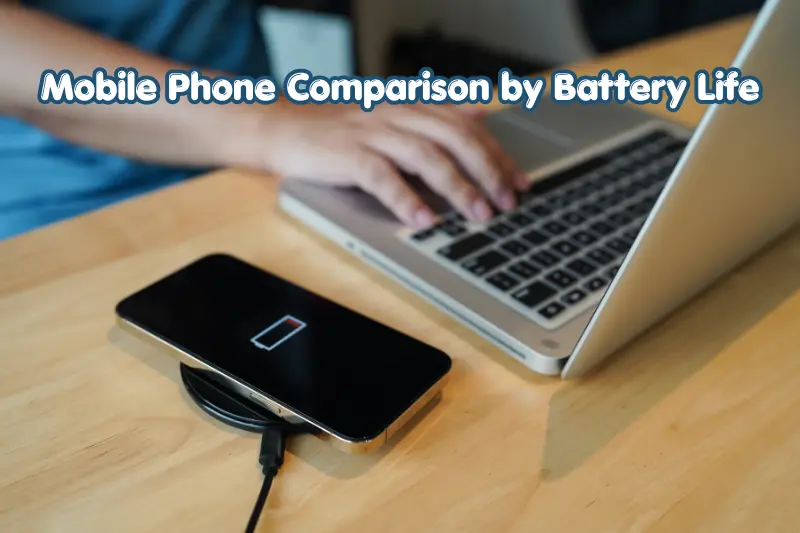
Battery capacity is normally expressed in milliampere-hours, or mAh.
A larger battery can provide more capacity, but battery life is influenced by many other factors.
Important factors include:
- Processor efficiency
- Display size
- Display resolution
- Refresh rate
- Network conditions
- App usage
- Background activity
- Software optimization
- Battery health
For example, two phones with similarly sized batteries can have different real-world battery endurance because their processors, displays, and software behave differently.
What Battery Features Should You Compare?
Look at:
- Battery capacity
- Wired charging speed
- Wireless charging
- Reverse charging
- Charger availability
- Battery health features
Fast charging can be convenient when you frequently need a quick battery boost, while battery endurance may matter more if you spend long periods away from a charger.
Mobile Phone Comparison by RAM and Storage
RAM affects how efficiently a phone can keep apps available for quick switching, while internal storage is used for apps, photos, videos, documents, and other files.
When comparing phones, check:
- RAM capacity
- Storage capacity
- Storage technology
- Expandable storage availability
- Different storage configurations
How Much Storage Do You Need?
Your ideal storage depends on how you use your phone.
A person who mainly uses messaging, web browsing, and cloud services may need less storage than someone who records large amounts of 4K video, downloads games, or stores extensive offline media.
Remember that advertised storage is not entirely available for personal files because the operating system and preinstalled software also use space.
Mobile Phone Comparison by Software
Software can significantly influence your long-term experience.
When comparing phones, examine:
- Operating system
- User interface
- Software update policy
- Security updates
- Preinstalled applications
- Customization options
- Privacy controls
- AI and productivity features
A phone that receives software and security updates for a longer period can remain useful for more years.
This is particularly important if you plan to keep your smartphone for several years rather than upgrading frequently.
Mobile Phone Comparison by Build Quality
Build quality affects durability, comfort, and the overall feel of a smartphone.
Consider:
- Frame material
- Back material
- Screen protection
- Water and dust resistance
- Weight
- Thickness
- Button placement
- Ergonomics
A premium material does not automatically make a phone more durable. Practical protection, construction quality, and an appropriate protective case can also matter.
If you frequently use your phone outdoors, water and dust resistance may be especially important.
Mobile Phone Comparison by Connectivity
Connectivity specifications can affect how your phone works with networks, accessories, vehicles, and other devices.
Check whether the phone supports the features relevant to your location and network provider.
These may include:
- 4G LTE
- 5G
- Wi-Fi
- Bluetooth
- NFC
- GPS
- USB connectivity
- Dual-SIM functionality
- eSIM support
5G support, for example, is useful only when compatible network coverage and service are available where you use the phone.
Mobile Phone Comparison Table
The following framework can help you compare two phones without focusing on only one specification.
| Feature | Phone A | Phone B | What to Consider |
|---|---|---|---|
| Price | Check current price | Check current price | Stay within budget |
| Processor | Compare chipset | Compare chipset | Performance and efficiency |
| Display | Size and panel | Size and panel | Brightness, resolution, refresh rate |
| Camera | Sensors and lenses | Sensors and lenses | Photo and video quality |
| Battery | Capacity | Capacity | Capacity and real-world endurance |
| Charging | Wired/wireless | Wired/wireless | Charging convenience |
| RAM | Available options | Available options | Multitasking |
| Storage | Capacity/options | Capacity/options | Apps and media |
| Software | OS and interface | OS and interface | Features and updates |
| Build | Materials/protection | Materials/protection | Durability and comfort |
| Connectivity | Network/features | Network/features | Carrier and accessory compatibility |
This structure is more useful than comparing one specification in isolation.
How to Choose a Phone Based on Your Needs
There is no single smartphone specification that determines whether a phone is suitable for everyone.
For Students
Students may benefit from:
- Reliable battery life
- Good performance
- Adequate storage
- A clear display
- Good connectivity
- Durable construction
- Reasonable pricing
A balanced phone can be more useful than spending extra money on advanced camera hardware that you rarely use.
For Gamers
Gamers should pay attention to:
- Processor and GPU
- Sustained performance
- Cooling
- Refresh rate
- Touch response
- Battery capacity
- Charging speed
- Speaker quality
Gaming performance should be evaluated over extended sessions, not just from short benchmark results.
For Photography
Photography-focused users should compare:
- Main camera sensor
- Ultrawide camera
- Telephoto capability
- Optical stabilization
- Autofocus
- Night photography
- Portrait processing
- Video recording
Look at sample photos and videos from reliable reviews whenever possible.
For Business Users
Business users may prioritize:
- Security
- Software updates
- Battery life
- Multitasking
- Connectivity
- Reliable communication apps
- Storage
- Productivity features
A secure and consistently updated device can be more valuable than a phone with unnecessary premium specifications.
Common Mobile Phone Comparison Mistakes
Many buyers make decisions based on one specification. That can lead to an inaccurate comparison.
Mistake 1: Choosing by Megapixels
More megapixels do not automatically produce better photos.
Mistake 2: Looking Only at Battery Capacity
Battery endurance depends on the entire hardware and software system.
Mistake 3: Assuming More RAM Is Always Better
More RAM can help in certain workloads, but software optimization and memory management also matter.
Mistake 4: Ignoring Software Updates
A phone’s long-term value can be affected by how long it receives software and security updates.
Mistake 5: Comparing Launch Prices Only
Current prices can change after launch. Always compare the actual price available when you are ready to buy.
Mistake 6: Ignoring Network Compatibility
A phone may support certain network technologies or bands that are not equally useful with every carrier or region.
Mistake 7: Buying Based Only on Brand
Brand reputation can be useful, but individual models can differ significantly. Compare the actual phones rather than assuming every model from one brand is better or worse.
A Simple Step-by-Step Mobile Phone Comparison Method
Use this process before making a purchase:
Step 1: Set Your Budget
Determine the maximum amount you are comfortable spending.
Step 2: Identify Your Priorities
Choose your three most important features, such as camera, gaming, battery, display, or software support.
Step 3: Shortlist Two to Four Phones
Avoid comparing too many models at once. A smaller shortlist makes meaningful differences easier to understand.
Step 4: Compare Core Specifications
Check the processor, display, cameras, battery, RAM, storage, connectivity, and software.
Step 5: Check Real-World Reviews
Look for independent testing that examines battery life, camera quality, thermal performance, and everyday usability.
Step 6: Check Long-Term Support
Find out how the manufacturer handles operating-system and security updates.
Step 7: Compare the Current Price
Consider the actual price, available storage configuration, warranty, and included accessories.
Step 8: Make a Needs-Based Decision
Choose the device whose features match your priorities rather than simply selecting the phone with the longest specification list.
How to Get Better Results From a Phone Comparison
A useful comparison should combine specifications with real-world use.
Before buying, ask yourself:
- How many hours do I use my phone each day?
- Do I play demanding games?
- Do I take many photos or videos?
- Do I need large storage?
- How important is fast charging?
- Will I keep the phone for several years?
- Do I need 5G or eSIM?
- Which software features do I actually use?
- Is water resistance important?
- Does the phone work properly with my mobile network?
These questions can quickly eliminate phones that do not match your requirements.
If you are looking for a reliable Mobile Phone Comparison, compare important features such as display quality, camera performance, battery life, processor, storage, software support, and overall price before choosing a smartphone. You can also check trusted smartphone specifications and reviews to understand the technical differences between different mobile phone models.
Frequently Asked Questions
What is the best way to compare mobile phones?
The best approach is to compare phones across the categories that matter to your usage: processor, display, camera, battery, charging, storage, software, connectivity, build quality, and price. Give greater importance to your personal priorities instead of treating every specification as equally important.
Should I compare phone specifications or real-world performance?
You should consider both. Specifications explain what hardware a phone uses, while real-world testing shows how that hardware performs in everyday situations. Battery endurance, camera quality, thermal performance, gaming stability, and software responsiveness can differ even between phones with similar specifications.
Does more RAM make a phone faster?
More RAM can help with multitasking and keeping applications available, but RAM capacity alone does not determine overall speed. Processor performance, storage technology, operating-system optimization, and memory management also influence how responsive a smartphone feels during everyday use.
Is a higher megapixel camera always better?
No. Megapixel count is only one part of smartphone camera performance. Sensor size, lens quality, stabilization, autofocus, image processing, and software can have a major effect on photographs and videos. Comparing real camera samples is often more informative than comparing megapixel numbers alone.
What should I check before buying a new smartphone?
Check the current price, processor, display, cameras, battery, charging, RAM, storage, software-update policy, network compatibility, build quality, and warranty. Then consider how long you plan to keep the device. A phone that meets your specific needs can be more practical than one with higher specifications that you rarely use.
Conclusion
Mobile Phone Comparison is most useful when it focuses on real needs rather than specification numbers alone. Processor performance, display quality, camera capabilities, battery life, charging, storage, software support, connectivity, and build quality all contribute to the overall smartphone experience.
Start by setting your budget and identifying the features that matter most to you. Then compare a small number of suitable phones using the same criteria. Check independent real-world testing, current pricing, software support, and network compatibility before making your final decision.
The practical next step is simple: choose two or three smartphones you are considering and compare them category by category. This will make the differences clearer and help you select a phone that fits your everyday use.