
Introduction
iPhone Tips can help you get much more from your device without downloading extra apps or changing complicated settings. Whether you use an iPhone for work, entertainment, photography, communication, or everyday tasks, a few simple features can make it faster and easier to use.
This guide covers practical iPhone tips for battery life, privacy, camera, screenshots, keyboard shortcuts, notifications, storage, Safari, productivity, and everyday convenience. Some features vary by iPhone model and iOS version, so the exact menus may differ slightly. Apple’s current iPhone User Guide covers features across supported iOS versions and models.
1. Use Spotlight Search to Find Almost Anything
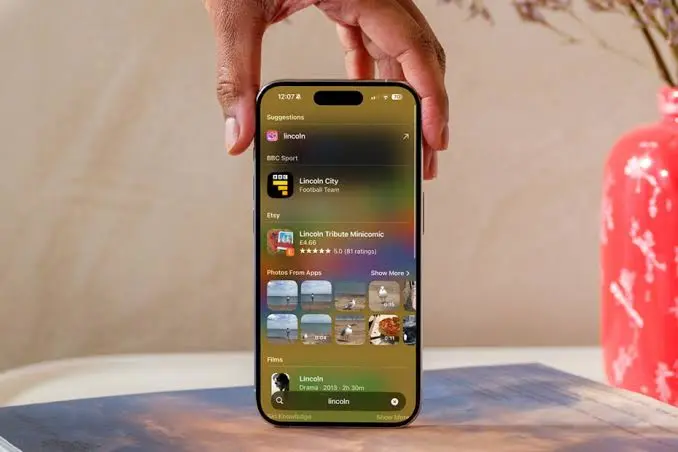
One of the easiest iPhone tips is to use Spotlight Search instead of manually looking through your Home Screen.
Swipe down from the middle of the Home Screen and type what you need. You can search for apps, contacts, messages, settings, files, and other information.
Why Spotlight is useful
Instead of searching through several folders, you can simply type:
- “Calculator” to open the calculator
- “Wi-Fi” to find related settings
- A person’s name to find contact information
- A file name to locate a document
- A word or phrase to search for information
This is especially useful when you have dozens of apps installed.
iPhone Tips can help you use your iPhone more efficiently every day.
With useful iPhone Tips, you can discover hidden features and shortcuts.
These iPhone Tips can also help improve your phone’s performance and battery life.
Learning simple iPhone Tips makes everyday tasks faster and easier.
Try these practical iPhone Tips to get more from your device.
More iPhone Tips can help you become a smarter and more confident iPhone user.
2. Customize Control Center
Control Center gives you quick access to frequently used controls without opening Settings every time.
Depending on your iPhone and iOS version, you can customize available controls to suit your routine. Useful controls may include:
- Flashlight
- Calculator
- Screen recording
- Camera
- Low Power Mode
- Focus
- Dark Mode
- Notes
- Accessibility features
Apple’s current iPhone guide includes extensive controls for customizing Control Center and other parts of the iPhone interface.
Pro tip
Add the controls you use regularly and remove shortcuts you rarely need. The goal is to make Control Center work around your habits rather than making you search through Settings.
3. Improve Battery Life With Smart Settings
If your iPhone battery seems to run down quickly, don’t immediately assume the battery needs replacing.
Start by checking Settings > Battery. This section can show which apps and activities are consuming the most power.
Try these battery-saving habits
- Reduce unnecessary screen brightness.
- Use Wi-Fi when practical.
- Review apps that frequently use your location.
- Turn on an appropriate Power Mode when needed.
- Reduce unnecessary notifications.
- Keep iOS updated.
- Avoid exposing the iPhone to excessive heat.
Apple notes that battery capacity naturally decreases as lithium-ion batteries chemically age. Charging patterns and temperature can also affect battery lifespan.
4. Use Optimized Battery Charging
Optimized Battery Charging is designed to reduce the amount of time your iPhone spends fully charged.
When the feature is active, iPhone can delay charging beyond 80% in certain situations and complete charging closer to when it expects you will unplug the device.
How to check it
On supported recent iPhones:
- Open Settings.
- Tap Battery.
- Tap Charging.
- Review your charging options.
Older iPhone models may place Optimized Battery Charging under Battery Health & Charging.
Important limitation
Optimized Battery Charging learns your charging routine, so it may not activate every time. Travel and irregular charging patterns can affect when the feature engages.
5. Use the Back Tap Feature
Back Tap can turn the back of your iPhone into a shortcut.
On compatible models, you can configure a double tap or triple tap to perform supported actions.
Depending on your settings, Back Tap can be useful for:
- Taking screenshots
- Opening a feature
- Running an accessibility action
- Activating a shortcut
To explore it, check Settings > Accessibility > Touch > Back Tap on supported iPhones.
Why it matters
Back Tap can be particularly useful when you frequently perform the same action and want a faster way to trigger it.
6. Take Screenshots Faster
Screenshots are useful for saving receipts, conversations, instructions, maps, product information, and other content.
On Face ID iPhones, press the Side button and Volume Up button at the same time.
After taking the screenshot, tap the preview to crop, mark up, or share it.iPhone Tips can help you use your iPhone more efficiently every day.
With useful iPhone Tips, you can discover hidden features and shortcuts.
These iPhone Tips can also help improve your phone’s performance and battery life.
Learning simple iPhone Tips makes everyday tasks faster and easier.
Try these practical iPhone Tips to get more from your device.
More iPhone Tips can help you become a smarter and more confident iPhone user.
A useful screenshot habit
Instead of keeping hundreds of screenshots forever, regularly delete unnecessary ones. Screenshots can quietly consume storage over time.
7. Scan Documents With Your iPhone
You don’t always need a separate scanner to digitize a paper document.
The Notes app can be used to scan documents on supported iOS versions.
A basic workflow is:
- Open Notes.
- Create or open a note.
- Choose the document scanning option.
- Position the document inside the camera view.
- Capture the pages.
- Save the scanned document.
This can be useful for receipts, forms, handwritten notes, invoices, and school or work documents.
8. Make Your iPhone Keyboard Faster
The iPhone keyboard includes several small features that can speed up typing.
Try these keyboard tricks
Double-tap the Space bar: Add a period and space at the end of a sentence.
Press and hold the Space bar: On supported versions, this can help move the cursor more precisely through text.
Use text replacement: Create shortcuts for frequently typed phrases.
For example, you could create a shortcut that expands into your full email address or a commonly used professional phrase.
Why text replacement is useful
If you repeatedly type the same information, a short shortcut can save time and reduce typing mistakes.
9. Use Live Text With Photos
Live Text can make text inside photos more useful.
If your iPhone and iOS version support the feature, you may be able to interact with text appearing in a photograph.
For example, a photo of a business card may contain a phone number or email address that you can interact with instead of manually typing it.
This can be helpful for:
- Phone numbers
- Addresses
- Website information
- Notes
- Printed documents
- Signs and labels
10. Improve Your iPhone Photos
You don’t need to be a professional photographer to take better iPhone pictures.
Simple photography tips
- Clean the camera lenses before important photos.
- Tap the subject you want to focus on.
- Avoid excessive digital zoom when possible.
- Keep the phone steady.
- Use natural light when available.
- Check the composition before pressing the shutter.
- Take several photos when capturing an important moment.
Apple’s iPhone User Guide includes dedicated instructions for taking and editing photos and videos.
Use grid lines for better composition
If available in your camera settings, grid lines can help you position subjects more intentionally.
For example, instead of always placing the subject directly in the center, you can experiment with positioning it along one of the grid lines.
11. Manage Notifications Before They Become Distracting
Too many notifications can make your iPhone feel unnecessarily busy.
Open Settings > Notifications and review which apps are allowed to send alerts.
Consider disabling notifications for
- Shopping apps
- Games
- Promotional apps
- Apps you rarely use
- Services that don’t require immediate attention
Keep important notifications enabled for apps where timely alerts genuinely matter.
A cleaner notification system can make it easier to notice important messages.
12. Use Focus Modes
Focus modes can help separate work, personal time, sleep, driving, and other activities.
Instead of receiving every notification at every moment, you can configure Focus settings around specific situations.
Example
You could create a Work Focus that allows notifications from:
- Your manager
- Coworkers
- Calendar
- Important communication apps
Meanwhile, less important alerts can remain quiet until later.
This is one of the most practical iPhone tips for people who use their phone for both personal and professional tasks.
13. Free Up iPhone Storage
Running low on storage can become frustrating, particularly if you take lots of photos and videos.
Go to Settings > General > iPhone Storage to review how your storage is being used.
Look for large storage categories
- Photos and videos
- Large apps
- Downloaded media
- Messages and attachments
- Files
- Podcasts
Before deleting anything important, make sure you have a backup or another copy if you need it.
Common mistake
Don’t delete photos simply because they occupy a lot of space without first checking whether they are backed up and whether you still need them.
14. Use iCloud More Strategically
iCloud can help synchronize and store supported information across Apple devices.
Depending on your setup, iCloud can be used for things such as photos, contacts, notes, files, backups, and other information.
However, iCloud storage is not unlimited. If you regularly receive storage warnings, review what is consuming your available space rather than blindly deleting files.
15. Make Safari Easier to Use
Safari includes several features that can improve browsing.
Useful habits include:
- Organizing frequently visited websites.
- Using private browsing when appropriate.
- Closing unnecessary tabs.
- Saving important pages.
- Using reader-friendly viewing options when available.
- Checking website permissions.
Don’t keep hundreds of unused tabs
A large number of open tabs can make browsing difficult even if they don’t immediately cause a noticeable performance problem.
Close old tabs regularly and keep only the pages you actually need.
16. Use Siri for Quick Tasks
Siri can be useful when you don’t want to type.
Depending on your settings and available features, you can use Siri for tasks such as:
- Setting reminders
- Creating timers
- Sending messages
- Making calls
- Checking information
- Starting navigation
- Controlling compatible smart-home devices
The most useful approach is to use Siri for repetitive tasks rather than expecting it to handle every situation.
17. Protect Your Privacy
Privacy is one of the most important iPhone features to manage.
Review Settings > Privacy & Security periodically.
Pay particular attention to:
- Location Services
- Camera permissions
- Microphone permissions
- Photos access
- Contacts access
- Tracking permissions
- Bluetooth access
A good privacy rule
If an app doesn’t need access to something to perform its main function, consider whether it really needs that permission.
For example, a simple utility app may not need continuous access to your location.
18. Turn On Find My iPhone
Find My can help you locate supported Apple devices if they are misplaced.iPhone Tips can help you use your iPhone more efficiently every day.
With useful iPhone Tips, you can discover hidden features and shortcuts.
These iPhone Tips can also help improve your phone’s performance and battery life.
Learning simple iPhone Tips makes everyday tasks faster and easier.
Try these practical iPhone Tips to get more from your device.
More iPhone Tips can help you become a smarter and more confident iPhone user.
Make sure Find My is configured before you actually lose your phone.
This is much more useful than trying to configure tracking after the device has disappeared.
You should also keep your Apple Account secure and use a strong passcode.
19. Use AirDrop Carefully
AirDrop makes it convenient to share photos, documents, links, and other supported content with nearby Apple devices.
However, check your AirDrop receiving settings so that your device isn’t unnecessarily discoverable by people you don’t know.
Use the receiving option that fits your situation, especially when you’re in a crowded public location.
20. Learn the Tips App
One feature many users overlook is Apple’s built-in Tips app.
Apple says the Tips app provides collections covering navigation, photo editing, and other iPhone features, with new tips added regularly. Users can also save tips for later.
How to use it
- Open the Tips app.
- Browse the available collections.
- Open a tip that interests you.
- Save useful tips for future reference.
It’s a simple way to discover features you may not know exist.
21. Keep Your iPhone Software Updated
Software updates can introduce new features, security improvements, bug fixes, and changes to existing functionality.
Before installing a major update, make sure important information is backed up.
Also remember that the exact features available to you depend on your iPhone model, region, and installed iOS version. Apple’s current User Guide documents iOS 27 and supported iPhone models.
22. Use Battery Information Instead of Guessing
If your battery seems weak, check the battery settings before changing several unrelated settings.
Look at:
- Battery usage by app
- Recent activity
- Battery health information where available
- Charging settings
- Power-saving options
This helps identify whether the problem is caused by heavy usage, an individual app, environmental conditions, or normal battery aging.
23. Don’t Ignore Heat
Heat is an important consideration for rechargeable batteries.
Apple recommends avoiding use or charging in ambient temperatures above 95°F (35°C) because excessive heat can permanently reduce battery lifespan.
Avoid these habits
- Leaving the iPhone in a hot car
- Charging it in direct sunlight
- Using demanding apps in extreme heat
- Covering the phone while it is overheating
If your iPhone becomes unusually hot, give it time to return to a normal temperature.
24. Avoid Common iPhone Mistakes
Even experienced users can make simple mistakes.
Common mistakes include:
Ignoring storage warnings: Low storage can become a recurring problem if you never review large files.
Allowing every app to send notifications: This creates unnecessary distractions.
Giving apps excessive permissions: Review privacy settings regularly.
Using poor-quality charging accessories: Choose reliable, compatible accessories.
Ignoring software updates: Updates can include important security and functionality improvements.
Deleting files without checking backups: Always confirm that important data exists somewhere else before removing it.
25. Build Your Own iPhone Shortcut System
The best iPhone tips are the ones that fit your routine.
Think about tasks you perform repeatedly every day. Then look for a faster way to perform them using built-in features such as Shortcuts, widgets, Focus modes, Siri, Control Center, or Back Tap.
For example, someone who travels frequently might prioritize:
- Maps
- Weather
- Wallet
- Translation
- Focus
- Battery settings
A student might prioritize:
- Notes
- Reminders
- Calendar
- Scanner
- Focus
- Files
The goal isn’t to use every iPhone feature. It’s to configure the device around the things you actually do.
Best iPhone Tips at a Glance
| iPhone Tip | Main Benefit |
|---|---|
| Spotlight Search | Find apps and information quickly |
| Control Center | Access common settings faster |
| Optimized Battery Charging | Helps reduce battery wear |
| Back Tap | Creates convenient shortcuts |
| Live Text | Interact with text in photos |
| Focus Modes | Reduce unwanted distractions |
| iPhone Storage | Identify what’s consuming space |
| Privacy Settings | Control app permissions |
| Find My | Help locate a misplaced device |
| AirDrop | Quickly share compatible content |
| Tips App | Discover additional iPhone features |
If you want to discover more useful smartphone information, check out our Phone Reviews and explore our latest mobile guides and comparisons.
For more helpful iPhone advice, you can also read our iPhone Tips and learn about useful features, settings, battery life, and everyday smartphone use.
For official information about iPhone features and software, visit Apple’s official iPhone page.
If you’re looking for more smartphone advice, explore our Phone Reviews for detailed information about the latest devices.
You can also discover more useful Mobile Tips to get the most out of your smartphone.
For official iPhone information and features, visit Apple’s official iPhone website.
Frequently Asked Questions
What are the best iPhone tips for beginners?
The best iPhone tips for beginners include learning Spotlight Search, Control Center, screenshots, notification controls, Focus modes, camera basics, and iPhone Storage. Start with features you use every day rather than trying to learn everything at once. Apple’s built-in Tips app is also useful for discovering features gradually.
iPhone Tips can help you use your iPhone more efficiently every day.
With useful iPhone Tips, you can discover hidden features and shortcuts.
These iPhone Tips can also help improve your phone’s performance and battery life.
Learning simple iPhone Tips makes everyday tasks faster and easier.
Try these practical iPhone Tips to get more from your device.
More iPhone Tips can help you become a smarter and more confident iPhone user.
How can I improve iPhone battery life?
Start by checking Settings > Battery to identify apps or activities using significant power. Reduce unnecessary notifications and screen brightness, avoid excessive heat, and use available charging optimization features. Apple says Optimized Battery Charging is designed to reduce the time an iPhone spends fully charged, which can help reduce battery wear.
How do I free up storage on my iPhone?
Go to Settings > General > iPhone Storage to see which apps and content use the most space. Review large videos, unused apps, downloads, and message attachments. Before deleting important photos or files, confirm that you have a backup or another copy if you need the content later.
How can I make my iPhone more private?
Review Settings > Privacy & Security and check permissions for location, photos, camera, microphone, contacts, tracking, and other data. Remove permissions that aren’t necessary. Also use a strong device passcode and keep your iPhone’s software updated to benefit from available security improvements.
Does charging an iPhone overnight damage the battery?
iPhone is designed to manage charging automatically, and Apple provides features such as Optimized Battery Charging to reduce the amount of time the device remains fully charged. Battery lifespan is affected by factors including temperature and charging patterns, so avoiding excessive heat is particularly important.
Conclusion
The best iPhone Tips aren’t necessarily hidden tricks. They are practical features that help you save time, protect your privacy, manage your battery, organize your phone, and get more done.
Start with a few changes: review your notification settings, check battery usage, clean up storage, configure Focus, review app permissions, and explore the Tips app. Then gradually customize features such as Control Center, Back Tap, Siri, and Shortcuts around your daily routine.
For the most accurate instructions, always check the settings available on your specific iPhone model and iOS version. Apple’s official iPhone User Guide is a useful reference because available features can vary between devices and software versions.